Introduction
Influencer Marketer strategies have become one of the most powerful ways for businesses to connect with their target audience. In today’s digital world, consumers trust recommendations from real people more than traditional advertisements. This shift has made influencer marketing an essential part of every successful digital marketing strategy.
One of the biggest challenges every Influencer Marketer faces is choosing between micro influencers and macro influencers. While both play an important role in promoting brands, they serve different purposes depending on campaign goals, audience size, and budget. Understanding these differences can help businesses maximize their return on investment (ROI) and build meaningful relationships with customers.
Whether you’re a startup, a small business, or an established company, selecting the right influencer can significantly impact your campaign’s success. Instead of focusing only on follower count, businesses should evaluate engagement, audience quality, authenticity, and relevance to their niche.
In this comprehensive guide, you’ll learn everything you need to know about micro and macro influencers, their advantages, disadvantages, and how an experienced Influencer Marketer can use them to achieve outstanding marketing results.
What Are Micro Influencers?
Micro influencers are social media creators with approximately 10,000 to 100,000 followers. They usually specialize in a particular niche such as fashion, beauty, travel, technology, food, fitness, parenting, finance, or lifestyle. Their followers are highly engaged because they see the influencer as relatable and trustworthy.
Unlike celebrities, micro influencers interact regularly with their audience by responding to comments, answering questions, and sharing authentic experiences. Because of this close connection, their recommendations often have a stronger impact on purchasing decisions.
For an Influencer Marketer, micro influencers are valuable because they can drive meaningful engagement and generate high-quality leads while staying within budget.
Benefits of Working with Micro Influencers
- Higher Engagement Rates
Micro influencers often receive more likes, comments, shares, and saves compared to larger creators. Their followers actively participate in discussions, making campaigns more interactive and effective.
- Greater Audience Trust
One of the biggest strengths of micro influencers is authenticity. Their content feels personal rather than promotional, making followers more likely to trust product recommendations.
- Affordable Marketing Solution
For startups and small businesses, collaborating with micro influencers is a cost-effective strategy. Instead of investing your entire budget in one creator, you can work with several micro influencers and reach multiple niche audiences.
- Better Niche Targeting
Most micro influencers focus on a specific industry. Whether you’re promoting skincare, fitness products, technology, or travel services, partnering with niche creators helps your message reach people who are genuinely interested in your products.
- Higher Conversion Potential
Because their followers trust them, micro influencers often generate better conversion rates. Customers are more likely to purchase products recommended by creators they genuinely admire.
Challenges of Micro Influencers
Although micro influencers offer many advantages, they also have a few limitations.
- Their audience size is smaller than macro influencers.
- Brands may need to collaborate with multiple creators to achieve wider reach.
- Content quality can vary depending on the creator’s experience.
- Managing several influencer partnerships requires additional time and planning.
However, for most businesses, these challenges are outweighed by the higher engagement and stronger customer relationships that micro influencers provide.
Why Businesses Choose Micro Influencers
Many successful brands now prioritize micro influencers because they create authentic content that resonates with audiences. Instead of simply promoting products, they share real-life experiences, tutorials, reviews, and honest opinions.
An experienced Influencer Marketer understands that genuine recommendations often outperform expensive celebrity endorsements. When businesses focus on building trust rather than chasing large follower counts, they are more likely to achieve long-term success.
In the next section, we’ll explore macro influencers, their strengths, and how they compare to micro influencers when planning successful influencer marketing campaigns.
What Are Macro Influencers?
Macro influencers are social media creators who typically have 100,000 to over 1 million followers. They have built a large online presence and often work with well-known brands across multiple platforms such as Instagram, YouTube, TikTok, Facebook, and LinkedIn. Many macro influencers create professional, high-quality content and have years of experience in influencer marketing.
For an Influencer Marketer, macro influencers are an excellent choice when the goal is to reach a large audience quickly and increase brand awareness. Their content often reaches thousands—or even millions—of people within a short period, making them ideal for major product launches and nationwide campaigns.
Benefits of Working with Macro Influencers
- Massive Audience Reach
The biggest advantage of macro influencers is their ability to expose your brand to a large audience. If your objective is to increase visibility and attract new customers, macro influencers can help your campaign gain significant attention.
- Professional Content Creation
Most macro influencers have experience producing high-quality content with professional photography, videography, editing, and storytelling. This helps brands present their products in a visually appealing and engaging way.
- Strong Brand Awareness
A successful Influencer Marketer knows that brand awareness is the first step in the customer journey. Macro influencers can introduce your business to thousands of potential customers who may not have heard of your brand before.
- Higher Credibility
Collaborating with well-known influencers can strengthen your brand image. Consumers often associate established creators with quality and reliability, which can increase confidence in your products or services.
- Multi-Platform Presence
Many macro influencers are active on several social media platforms. This allows brands to reach audiences across Instagram, YouTube, TikTok, Facebook, and LinkedIn through a single collaboration.
Challenges of Macro Influencers
Despite their advantages, macro influencers also have a few drawbacks.
- Collaboration costs are much higher.
- Engagement rates are often lower than micro influencers.
- Sponsored posts may feel less personal because they work with many brands.
- Smaller businesses may find macro influencer campaigns difficult to afford.
Because of these factors, an experienced Influencer Marketer carefully evaluates campaign goals before deciding whether a macro influencer is the right fit.
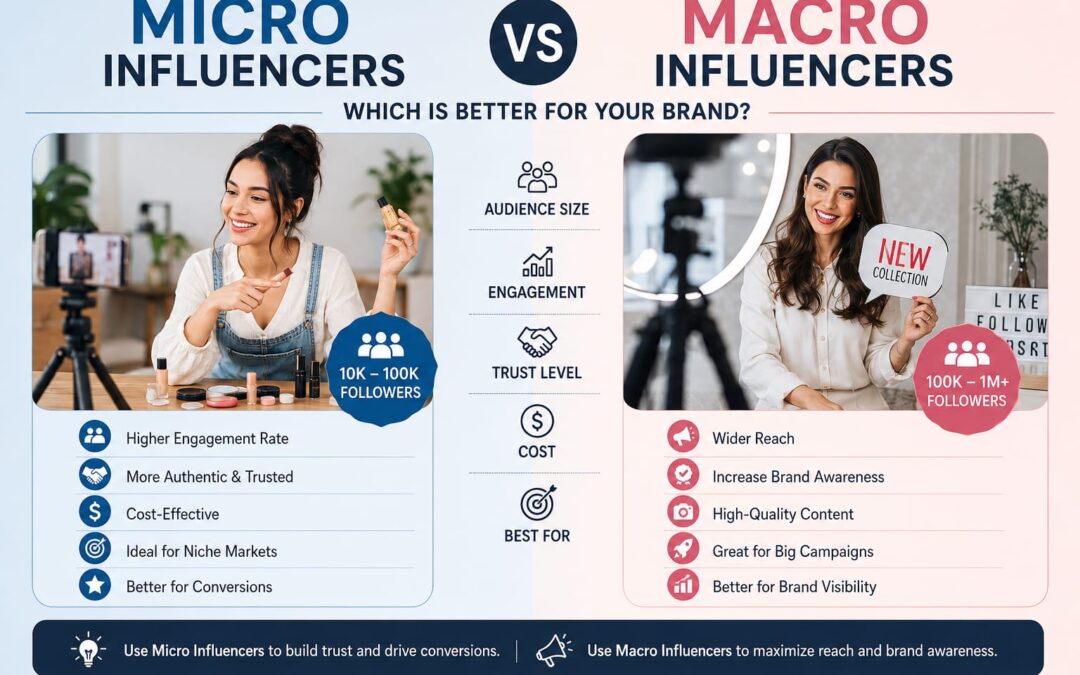
Micro vs. Macro Influencers: A Detailed Comparison
Choosing between micro and macro influencers depends on your marketing objectives. Here’s how they compare:
Feature| Micro Influencers| Macro Influencers
Followers| 10K–100K| 100K–1M+
Engagement Rate| High| Moderate
Audience Trust| Very High| High
Cost| Affordable| Expensive
Reach| Niche| Wide
Best For| Conversions & Engagement| Brand Awareness
ROI| Often Higher| Depends on Campaign Goals
Which Is Better for Small Businesses?
For startups and small businesses, micro influencers usually provide the best value. They offer authentic content, stronger engagement, and better conversion rates without requiring a large marketing budget.
Instead of investing in one expensive collaboration, businesses can work with multiple micro influencers to reach different niche audiences. This strategy often delivers better results and a higher return on investment.
Which Is Better for Large Brands?
Large companies often choose macro influencers because their priority is increasing brand awareness on a national or global scale. Macro influencers help businesses launch new products, reach millions of users, and create widespread visibility in a short period.
However, many successful brands don’t rely on just one type of influencer. They combine macro influencers for reach and micro influencers for engagement, creating a balanced and effective marketing strategy.
An experienced Influencer Marketer understands that the most successful campaigns are built on the right mix of influencers, clear objectives, and authentic content—not just follower count.
What Are Macro Influencers?
Macro influencers are social media creators who typically have 100,000 to over 1 million followers. They have built a large online presence and often work with well-known brands across multiple platforms such as Instagram, YouTube, TikTok, Facebook, and LinkedIn. Many macro influencers create professional, high-quality content and have years of experience in influencer marketing.
For an Influencer Marketer, macro influencers are an excellent choice when the goal is to reach a large audience quickly and increase brand awareness. Their content often reaches thousands—or even millions—of people within a short period, making them ideal for major product launches and nationwide campaigns.
Benefits of Working with Macro Influencers
- Massive Audience Reach
The biggest advantage of macro influencers is their ability to expose your brand to a large audience. If your objective is to increase visibility and attract new customers, macro influencers can help your campaign gain significant attention.
- Professional Content Creation
Most macro influencers have experience producing high-quality content with professional photography, videography, editing, and storytelling. This helps brands present their products in a visually appealing and engaging way.
- Strong Brand Awareness
A successful Influencer Marketer knows that brand awareness is the first step in the customer journey. Macro influencers can introduce your business to thousands of potential customers who may not have heard of your brand before.
- Higher Credibility
Collaborating with well-known influencers can strengthen your brand image. Consumers often associate established creators with quality and reliability, which can increase confidence in your products or services.
- Multi-Platform Presence
Many macro influencers are active on several social media platforms. This allows brands to reach audiences across Instagram, YouTube, TikTok, Facebook, and LinkedIn through a single collaboration.
Challenges of Macro Influencers
Despite their advantages, macro influencers also have a few drawbacks.
- Collaboration costs are much higher.
- Engagement rates are often lower than micro influencers.
- Sponsored posts may feel less personal because they work with many brands.
- Smaller businesses may find macro influencer campaigns difficult to afford.
Because of these factors, an experienced Influencer Marketer carefully evaluates campaign goals before deciding whether a macro influencer is the right fit.
Micro vs. Macro Influencers: A Detailed Comparison
Choosing between micro and macro influencers depends on your marketing objectives. Here’s how they compare:
Feature| Micro Influencers| Macro Influencers
Followers| 10K–100K| 100K–1M+
Engagement Rate| High| Moderate
Audience Trust| Very High| High
Cost| Affordable| Expensive
Reach| Niche| Wide
Best For| Conversions & Engagement| Brand Awareness
ROI| Often Higher| Depends on Campaign Goals
Which Is Better for Small Businesses?
For startups and small businesses, micro influencers usually provide the best value. They offer authentic content, stronger engagement, and better conversion rates without requiring a large marketing budget.
Instead of investing in one expensive collaboration, businesses can work with multiple micro influencers to reach different niche audiences. This strategy often delivers better results and a higher return on investment.
Which Is Better for Large Brands?
Large companies often choose macro influencers because their priority is increasing brand awareness on a national or global scale. Macro influencers help businesses launch new products, reach millions of users, and create widespread visibility in a short period.
However, many successful brands don’t rely on just one type of influencer. They combine macro influencers for reach and micro influencers for engagement, creating a balanced and effective marketing strategy.
An experienced Influencer Marketer understands that the most successful campaigns are built on the right mix of influencers, clear objectives, and authentic content—not just follower count.
How to Choose the Right Influencer for Your Brand
Selecting the right influencer is one of the most important responsibilities of an Influencer Marketer. The success of your campaign depends not only on the influencer’s follower count but also on their audience quality, engagement, and alignment with your brand values.
Before choosing an influencer, ask yourself these questions:
- Who is my target audience?
- What is my campaign goal?
- What is my budget?
- Which social media platform does my audience use the most?
- Does the influencer create authentic and engaging content?
- Does their audience match my ideal customers?
By answering these questions, you can choose influencers who genuinely connect with your audience and deliver better marketing results.
Can You Combine Micro and Macro Influencers?
Absolutely! Many successful brands combine both micro and macro influencers in a single campaign.
For example, a fashion brand launching a new clothing collection may partner with a macro influencer to create excitement and reach a large audience. At the same time, several micro influencers can post honest reviews, styling videos, and real-life experiences that encourage people to purchase the products.
This combination helps brands gain maximum visibility while also building trust and increasing conversions.
Common Mistakes Every Influencer Marketer Should Avoid
Even experienced marketers can make mistakes. Here are some of the most common ones:
- Choosing Influencers Only by Follower Count
A large audience doesn’t always mean better results. Engagement and audience quality are often more important.
- Ignoring Engagement Rate
An influencer with fewer followers but high engagement can deliver better ROI than a creator with millions of inactive followers.
- Not Checking Audience Demographics
Always ensure the influencer’s audience matches your target market in terms of age, interests, and location.
- Focusing Only on One Platform
Different audiences use different platforms. Choose Instagram, TikTok, YouTube, LinkedIn, or Facebook based on where your potential customers are most active.
- Not Tracking Results
Every campaign should be measured using analytics. Without tracking performance, it’s difficult to know what worked and what needs improvement.
How to Measure the Success of an Influencer Marketing Campaign
Every Influencer Marketer should monitor campaign performance using important metrics such as:
- Reach
- Impressions
- Engagement Rate
- Website Traffic
- Click-Through Rate (CTR)
- Leads Generated
- Conversion Rate
- Sales
- Return on Investment (ROI)
- Brand Mentions
- Follower Growth
Tracking these metrics allows businesses to improve future campaigns and maximize their marketing budget.
Frequently Asked Questions (FAQs)
Are micro influencers better than macro influencers?
Not necessarily. Micro influencers usually have higher engagement and stronger audience trust, while macro influencers provide greater reach and brand awareness. The best choice depends on your campaign goals.
Which type of influencer offers the best ROI?
For many small and medium-sized businesses, micro influencers often deliver a better return on investment because of their authentic relationships with followers.
Can small businesses use influencer marketing?
Yes. Influencer marketing is one of the most cost-effective strategies for startups and small businesses. Working with micro influencers can help increase visibility, build trust, and drive sales without a large budget.
How does an Influencer Marketer choose the right influencer?
A professional Influencer Marketer evaluates audience demographics, engagement rate, content quality, niche relevance, authenticity, campaign goals, and budget before selecting an influencer.
Final Thoughts
Influencer marketing continues to shape the future of digital marketing, and choosing between micro and macro influencers is one of the most important decisions every Influencer Marketer will make. There is no universal answer because every brand has different goals, budgets, and target audiences.
Micro influencers are ideal for businesses looking to build trust, increase engagement, and generate conversions. Their authentic content and close relationship with followers make them valuable partners for niche campaigns.
Macro influencers, on the other hand, are perfect for brands aiming to maximize visibility, launch products, and reach a broader audience. Their professional content and extensive reach make them an excellent choice for large-scale campaigns.
The most successful strategy often combines both. By using macro influencers for awareness and micro influencers for engagement, brands can create balanced campaigns that deliver impressive long-term results.
Whether you’re a startup or an established business, investing in the right influencer partnerships can help you strengthen your brand, connect with your audience, and achieve sustainable growth.
If you’re looking for expert Influencer Marketer services, proven influencer marketing strategies, and actionable digital marketing insights, visit https://kavzz.com. At Kavzz, we help businesses connect with the right influencers, create meaningful partnerships, and build successful campaigns that deliver measurable results.
Start your influencer marketing journey today and discover how the right strategy can take your brand to the next level.